PMOS Syndrome: Symptoms, Causes & Hormones
- Vasanthi Bezawada
- Jun 24
- 4 min read

Many women experience irregular periods, mood swings, fatigue, acne, or weight gain without knowing the underlying cause. Polyendocrine Metabolic Ovarian Syndrome (PMOS) is an emerging term used to describe the hormonal and metabolic aspects of Polycystic Ovary Syndrome (PCOS). While PCOS remains the official medical diagnosis, PMOS highlights the important connection between hormones, metabolism, insulin resistance, and women's overall health.
What is PMOS (Polyendocrine Metabolic Ovarian Syndrome)?
For years, the condition affecting millions of women worldwide has been known as Polycystic Ovary Syndrome (PCOS). But many healthcare professionals and wellness experts believe the name doesn't fully explain what's happening inside the body.
This has led to growing discussions around a newer term: Polyendocrine Metabolic Ovarian Syndrome (PMOS).
PMOS is not currently an official medical diagnosis. Instead, it is an emerging way of describing PCOS that recognizes the condition as more than just an ovarian issue. It highlights the complex relationship between hormones, metabolism, insulin sensitivity, and reproductive health.
In simple terms, PMOS reflects the reality that many women experience symptoms that affect their entire body—not just their ovaries.
Quick Answer
PMOS (Polyendocrine Metabolic Ovarian Syndrome) is an emerging term used by some health professionals to describe the hormonal and metabolic aspects of PCOS (Polycystic Ovary Syndrome). While PCOS remains the official medical diagnosis, PMOS highlights the role of hormones, insulin resistance, metabolism, and reproductive health in women's wellness.
Why Are People Talking About PMOS?
The name "Polycystic Ovary Syndrome" can be confusing.
Many women diagnosed with PCOS:
Don't actually have ovarian cysts
Experience metabolic symptoms before reproductive symptoms
Struggle with insulin resistance
Face weight management challenges
Deal with mood swings and fatigue
Experience hormonal imbalances that affect daily life
Because of this, some experts believe a term like Polyendocrine Metabolic Ovarian Syndrome better captures the broader picture.
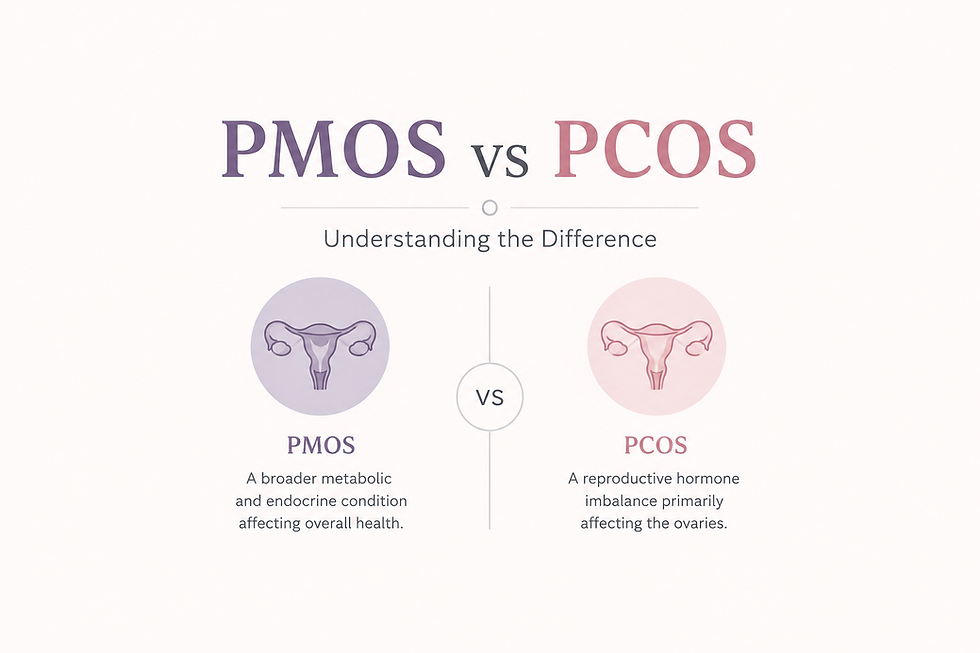
PMOS vs PCOS: What's the Difference?
The short answer is that PMOS and PCOS describe the same underlying condition.
The difference lies in how the condition is viewed.
PCOS | PMOS |
Focuses on ovaries and reproductive symptoms | Focuses on hormonal and metabolic health |
Traditional medical term | Emerging descriptive term |
Widely used in healthcare | Growing discussion in wellness and functional health communities |
Often associated with ovarian cysts | Emphasizes whole-body effects |
PMOS aims to recognize that hormonal health, insulin function, metabolism, and reproductive wellness are all connected.
Common Symptoms of PMOS
Women with PMOS may experience a wide range of symptoms.
Irregular Menstrual Cycles
Missed periods, delayed cycles, or unpredictable menstruation are common signs.
Persistent Fatigue
Many women report feeling tired even after getting enough sleep.
Weight Gain or Difficulty Losing Weight
Particularly around the abdominal area, weight management can become more challenging.
Mood Swings
Hormonal fluctuations may affect emotional well-being and daily mood.
Acne and Skin Changes
Hormonal imbalances can contribute to adult acne and oily skin.
Hair Thinning
Some women experience hair loss or thinning hair due to elevated androgen levels.
Excess Facial or Body Hair
Increased androgen activity may lead to unwanted hair growth.
Cravings and Blood Sugar Fluctuations
Many women with PMOS notice stronger cravings, energy crashes, and irregular appetite patterns.
What Causes PMOS?
While researchers continue studying the condition, several factors appear to play important roles.
Hormonal Imbalances
Women with PMOS often experience elevated androgen levels, which can interfere with normal ovulation.
Insulin Resistance
One of the most important factors linked to PMOS is insulin resistance.
When cells become less responsive to insulin, the body compensates by producing more insulin. This can trigger hormonal disruptions and worsen symptoms.
Genetics
Family history may increase the likelihood of developing PMOS-related symptoms.
Chronic Inflammation
Low-grade inflammation may contribute to both metabolic and hormonal dysfunction.
The Metabolic Side of PMOS
One reason the term PMOS is gaining attention is because it acknowledges metabolic health.
Many women discover that their symptoms aren't limited to their menstrual cycle.
They may also experience:
Blood sugar fluctuations
Increased cravings
Energy crashes
Weight management challenges
Difficulty maintaining healthy insulin levels
This metabolic component is often overlooked when people focus only on reproductive symptoms.
How PMOS Can Affect Daily Life
PMOS isn't just about periods.
It can influence:
Energy Levels
Many women describe feeling exhausted despite eating well and sleeping enough.
Confidence
Acne, hair thinning, and unwanted hair growth can affect self-esteem.
Productivity
Brain fog and fatigue may make work, study, and daily tasks feel more difficult.
Emotional Health
Hormonal fluctuations can impact mood, stress levels, and overall well-being.

Supporting Hormonal Balance with PMOS
While medical guidance is essential, lifestyle habits can also play an important role in supporting hormonal wellness.
Prioritize Protein
Protein can help support energy levels and balanced blood sugar throughout the day.
Focus on Nutrient-Dense Foods
A balanced diet rich in vitamins, minerals, healthy fats, and fiber may support overall wellness.
Support Metabolic Health
Regular movement, quality sleep, and stress management are important foundations for hormonal health.
Include Functional Foods
Nutrient-rich foods such as flaxseeds, pumpkin seeds, sunflower seeds, and sesame seeds are commonly included in hormone-supportive wellness routines.
Stay Consistent
Small daily habits often create more sustainable results than extreme lifestyle changes.
PMOS and Women's Wellness
Whether you call it PCOS or PMOS, one thing is clear:
This condition is about far more than ovarian health alone.
It involves a complex relationship between hormones, metabolism, insulin function, energy levels, emotional well-being, and reproductive health.
Understanding this broader perspective can help women make more informed decisions about their health and work toward long-term wellness.
Frequently Asked Questions About PMOS
Is PMOS an official medical diagnosis?
Currently, no. PMOS is an emerging term used by some health professionals and wellness educators to describe the broader hormonal and metabolic nature of PCOS.
Is PMOS the same as PCOS?
Yes. PMOS is generally used as a different way of describing the same condition known medically as Polycystic Ovary Syndrome (PCOS).
Why do some people prefer the term PMOS?
Because it emphasizes hormonal and metabolic dysfunction rather than focusing only on ovarian symptoms.
Can PMOS affect metabolism?
Yes. Insulin resistance, blood sugar regulation, cravings, and weight management challenges are commonly associated with PCOS and are often highlighted when discussing PMOS.

Final Thoughts
The growing use of the term Polyendocrine Metabolic Ovarian Syndrome (PMOS) reflects a shift in how many people understand hormonal health.
Rather than viewing the condition solely as an ovarian disorder, PMOS recognizes the interconnected role of hormones, metabolism, insulin sensitivity, and overall wellness.
While PCOS remains the official medical term, PMOS helps highlight the broader health challenges many women experience every day.
By understanding both the hormonal and metabolic aspects of the condition, women can take a more informed and holistic approach to supporting their health.


Comments